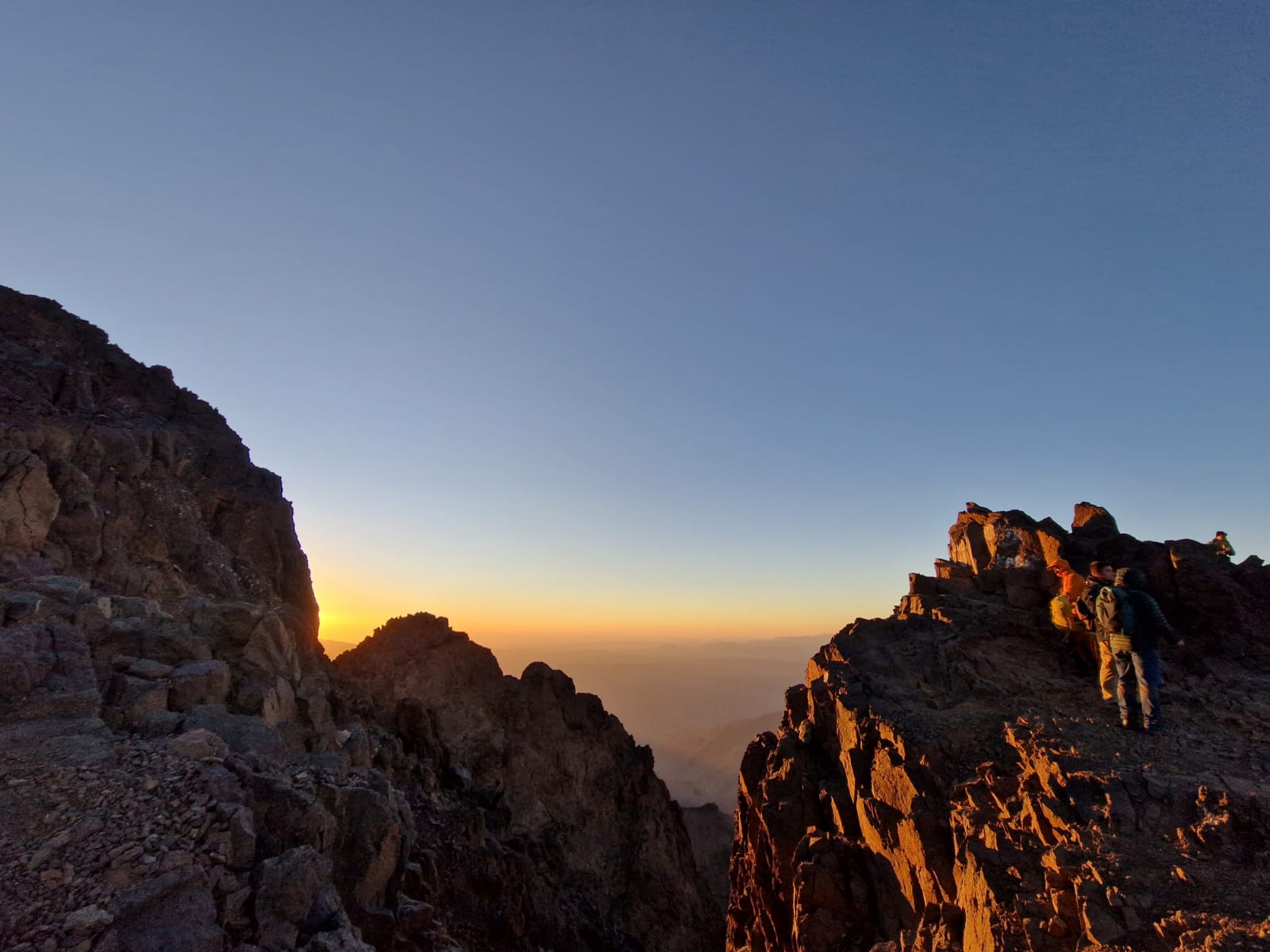
Mount Toubkal is the highest peak in North Africa, standing at 4,167 meters (13,671 feet). Located in the Atlas Mountains in Morocco, it attracts trekkers from around the world due to its stunning views, unique landscapes, and the challenge it provides. A 3-day trek to the summit is a popular option for those wanting to experience the mountain without an overly extended commitment.
Overview
With the start of the trek just a couple of hours drive from Marrakech, you can reach the summit and back within 2 days and still have time to explore one of Morocco’s most captivating cities, Marrakech.
Itinerary
Depart by car from Marrakech around 9am. The drive takes about 1h30 and goes south up the Moulay Brahim Gorges, past the Asni weekly market every Saturday then to Imlil. Imlil is (1740m) set in the upper level foothills of the Western High Atlas mountains, a main trail-head with streams and paths branching out in all directions. Here we shall leave our vehicle to take a welcome glass of mint tea in the village and meet your local guide prior to setting out for a 4km excursion. We will go travel south to the Berber village of Aroumd (Aremd) (1843m), passing the hamlets of ait Souka, Targa, and Imoula, up and down the stark slopes, the jagged Western High Atlas peaks of the Toubkal Massif before us – Jbels Aguelzim (3547m), Aksouâl (3847m) and the Adrar Adj (3122m) watching us all the way.
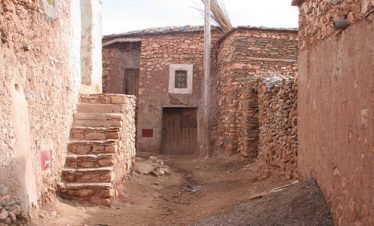
We stop at Aroumd to visit this rather singular village in the Assif Aït Mizane Valley, built seemingly house upon house on a large moraine spur, overlooking ancient irrigated terraced fields of barley, corn and vegetables. We'll then carry on for another Half an hour to get to our lunch stop, which will be served among a Berber familly in the village of ait Souka.
We will stay in Dar Ouassaggou for the night.
From the village of Imlil we will begin our Morocco trekking proper. Heading along the Mizane Valley, we'll first pass the village of Aremd and then onto the shrine of Sidi Chamarouch. We'll then continue east and cross the flood plains as our route takes us along mule tracks and up into the high rocky cliffs above the valley. Crossing the river we'll eventually come to the pastoral shrine of Sidi Chamarouch, which attracts tourists and pilgrims from far afield.
From here the trail continues to climb steadily, snaking and zigzagging its way up to the snowline and the Toukbal Refuge (3206m), our stop for the night.
Approx. 4 to 5hrs walking.
Includes
- Transport from Marrakech and back.
- Qualified Mountain Guide
- Accommdation: berber house or refuge
- All the food during the trek
- Cook to prepare your meals
- Mule to carry your luggage
Excludes
- International Flights
- Sleeping bags
- Travel insurance
- Drinks and Tips
- Items of a personal nature
Included: Guides, porters and muleteers Airport transfers in Marrakech Accommodation Food & water Specialist equipment Excluded: International flights Tips Any visa fees (not needed for UK citizens) Personal travel/rescue insurance
on the first day of your trip. Alternatively, if you have arrived early, we recommend you spend a few hours exploring Marrakech city. You can be picked up from the main Medina, in the city center (Jemaa el-Fnaa) at 9am .You can also be dropped in Marrakech city center if you would like to stay on.
The summit day can be 6 – 8 hours (with lots of breaks) so you do need a good level of fitness. We recommend training with jogging or sport 1-2 times a week, in the run-up to your trip.
The minimum age for this trip is 18, or 13 with a parent/guardian.
For Atlas Trekking you need to prepare as you would for walking in any mountain region; it can be warm and sunny during the day but the weather in the mountains can quickly change from sunshine to snow and cold winds (autumn through late spring). Here is the equipment and clothing we suggest. Clothing & Equipment: -Good walking boots and –socks -season sleeping bag -Comfortable shoes/slippers for camp/guesthouse -Walking stick -Trekking pants -Day sack/backpack -Lightweight waterproof -over-trousers / rain-pants -Headtorch / headlamp -Underwear -Basic First Aid Kit – refer to trip dossier for details -Ice axe and crampons (winter) -T-shirts -Water bottle or camel back (recommended) -Fleece jacket or warm jumper -Penknife (useful) -Lightweight windproof/waterproof jacket -Hat -Goggles (winter) and sunglasses (summer) -Lightweight thermal or fleece gloves Other: -Personal items (e.g. towel, sunscreen, wipes, toilet tissues, antibacterial handwash) -Small First Aid Kit including insect repellent, plasters, meds -Small rubbish bag to carry out what you carry in -Matches e.g. burn toilet paper -Trail snacks -Zip-Up bags for camera -Repair kit (eg. needle, thread, duct tape)
Yes, you can leave anything you don’t need.
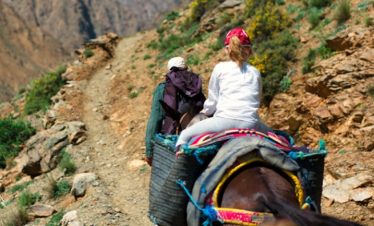
The local guides use mules to carry your main bag. You just need to carry a small bag with water, sun cream and waterproofs whilst trekking.
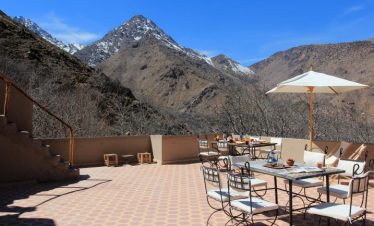
On the first and last nights, you’ll stay in a comfortable Riad called “Dar Ouassagou” in the village of Imlil. A variety of rooms are available, but usually, you will be sharing with one other person from the team. During the middle nights, you’ll stay in a mountain refuge which is very basic, with dormitory-style accommodation.
Wi-Fi is available in the Riad on the first night, however, it can be unreliable given the remote location. There is no internet available in the mountain refuge, and phone signal can be poor.
Each group is typically 12 people, with a maximum of 20.